Entry level security hiring is competitive. Most listings ask for experience, most applicants have certifications and no demonstrated work, and the field has a reputation for being easy to enter that does not match reality.
None of that means it cannot be done. It means the generic approach does not work and a specific one does.
Why the Entry Level Market Is Hard
Security is largely a second career field. Many roles genuinely benefit from prior experience in system administration, networking, development, or audit, so you are often competing with people who have five years of adjacent experience.
The industry also talks constantly about a skills shortage, which is real at the experienced end and much less real at the entry end. Those two facts together produce a lot of frustration.
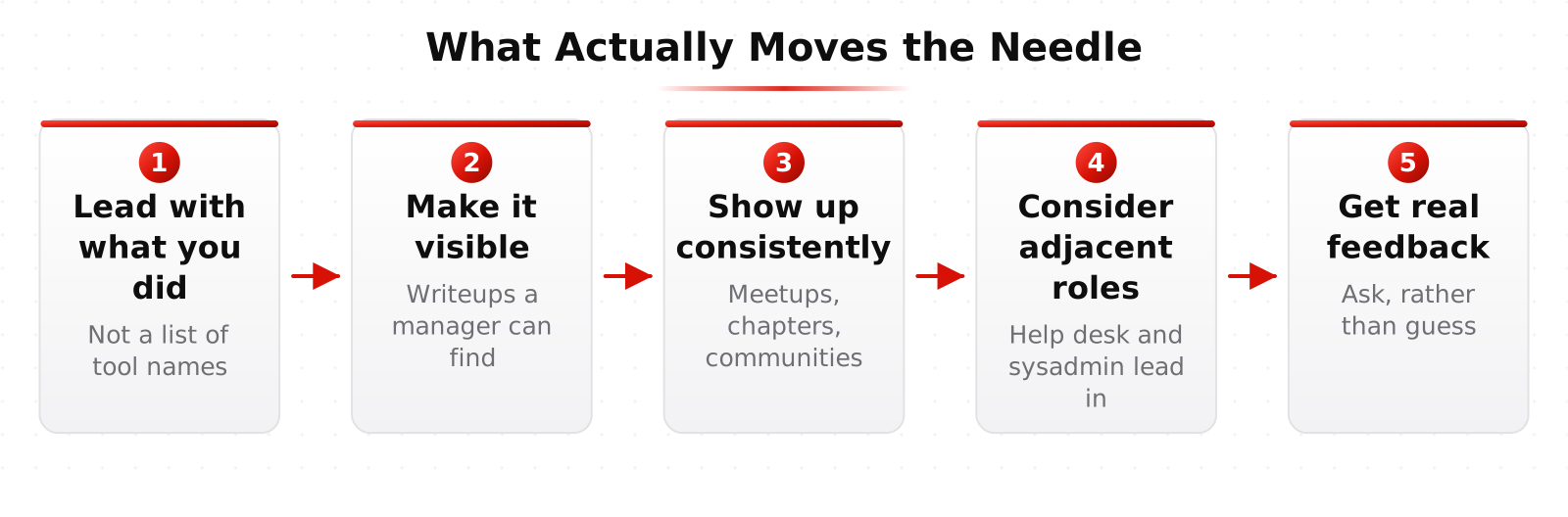
The practical consequences: adjacent roles are a legitimate and often faster route in, and demonstrated work matters more than credentials.
Fixing the Resume
Lead with things you did and what happened, not with a list of tools. Investigated a simulated intrusion across 40 hosts and produced an incident report is a line that gets read. Familiar with Splunk, Nmap, Wireshark is a line that gets skipped.
Include lab and course work explicitly, described as work. Nobody minds that it was a lab. They mind not being able to tell whether you have ever done anything.
Mirror the language in the job posting, because automated screening is real and matching vocabulary is not dishonest.
Keep it to one or two pages, put a link to your writeups at the top, and remove the objective statement.
Where the Jobs Actually Come From
A large share of hires come through people rather than through job boards. That is not a reassuring answer and it is the true one.
The version of networking that works is showing up consistently and being useful. Local security meetups, ISSA or ISACA chapters, BSides conferences, and online communities where you answer questions rather than only asking them.
Posting what you are learning publicly works better than most people expect, because it turns your practice into something other people can see over time.
Adjacent roles are the underrated route. Help desk, system administration, network administration, and audit all lead into security within a couple of years, from inside a company where people already know you.
The Questions You Will Get
Walk me through what happens when you type a URL into a browser. This is the standard depth probe. There is no wrong level of detail as long as it is accurate and you can go deeper when asked.
Tell me about an investigation you worked. Have a specific one ready, including what you found, what you did next, and what you would do differently.
How would you explain risk to someone who does not work in technology. They are checking whether you can communicate, which is at least half the job.
You join a team with no asset inventory. What do you do first. They want to see prioritization, not a complete plan.
And some form of what are you learning right now, which is checking whether you are curious without being told to be.
What Interviewers Are Actually Assessing
Whether you can say I do not know. Candidates who bluff a technical answer fail, every time, because bluffing in security work causes incidents.
Whether your enthusiasm is specific. Anyone can say they love security. Describing something that genuinely interested you last month is different.
Whether you will follow a process carefully when it is boring, because much of the work is exactly that.
And whether you can be corrected without becoming defensive.
The First 90 Days
This is the part that surprises people. New security hires often arrive expecting to fix things and spend three months learning where everything is and who owns it.
You will find problems in the first week that everyone already knows about and cannot fix yet, usually for reasons that turn out to be legitimate once you understand the context.
The advice that works is to ask questions before proposing changes, find the person who remembers why things are the way they are, fix one small thing properly to build credibility, and write down what you learn because in six months you will be the person who knows.
Knowing this in advance makes it much less discouraging, which is why Week 13 of the mentorship covers it directly.
If It Is Taking a Long Time
Apply to adjacent roles as well, and mean it. Getting inside a company in a technical role and moving across is a well worn path and it is often faster than waiting for a security opening.
Keep producing visible work. A person who has published a dozen writeups over a year looks completely different from a person with the same certifications and nothing to show.
And get feedback rather than guessing. Ask a hiring manager or a working practitioner to read your resume honestly. Most people will, and most people never ask.
Learn This at HackRange
Week 13 of the mentorship includes resume review, interview practice, and a straight conversation about the local market rather than generic encouragement.