Kali Linux
Kali Linux is a free operating system built for security testing. It is based on Debian Linux and is maintained by a company called OffSec. What sets Kali apart from a normal Linux install is everything that comes with it. Instead of tracking down and installing security tools one at a time, you get hundreds of them already installed and ready to run.
Most operating systems are built for everyday work like email, spreadsheets, and web browsing. Kali is built for one job, which is finding out how secure a system really is. The people who maintain it test the tools, keep them current, and make sure they work well together. That saves you hours of setup and lets you spend your time learning how the tools actually work.
The Same Tools the Professionals Use
There is no beginner version of Kali. The software inside it is the same software used by penetration testers, incident responders, and security researchers at real companies. When you learn Nmap in class, you are learning the same Nmap that a consultant runs on a paid engagement for a bank or a hospital. Nothing has been simplified or held back for training purposes.
This matters more than it might seem. A lot of security training uses practice software that behaves nothing like the real thing. Students finish the course, sit down at a real job, and find out that the screens look different and the commands do not match. Starting on the actual tools removes that gap completely.
Tools You Will Get to Know
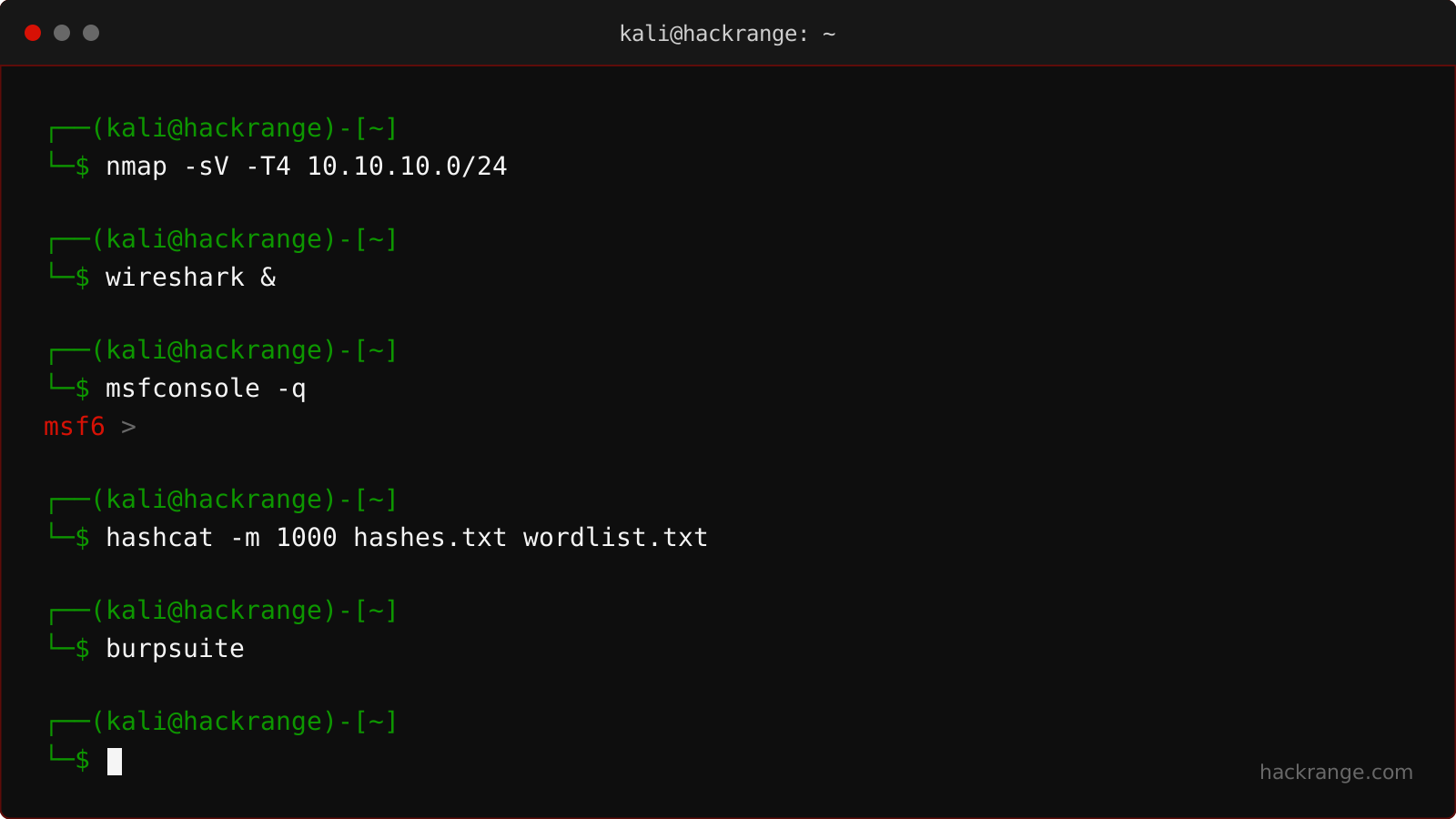
Nmap scans a network and reports which machines are online, what services they are running, and often which version of that software is installed. It is usually the first thing a tester runs, because you cannot test what you have not found yet.
Wireshark captures network traffic and lets you read it packet by packet. Watching a login travel across the wire in plain text is one of those lessons that sticks with people, and it explains why encryption matters far better than a slide ever could.
Burp Suite sits between your browser and a website so you can look at every request and change it before it is sent. Most web application flaws are found this way, by asking what happens if a value the site expects gets replaced with something it does not expect.
Metasploit is a framework that holds thousands of tested exploits for known vulnerabilities. It shows you what an attacker can actually do with a missing patch, which is very different from reading that a patch is missing on a scan report.
Hashcat and John the Ripper both work on password hashes. Watching a short password fall in a few seconds while a long passphrase holds out is a fast way to understand why password policy is written the way it is.
Using These Tools Responsibly
Powerful tools come with real responsibility. Scanning or attacking a network you do not own and do not have written permission to test is against the law in most places, even if you are only curious and even if you break nothing. Careers have ended over a single scan run against the wrong address.
That is why every exercise at Hack Range happens inside our lab, against targets we built for exactly that purpose. You get to try things freely, break them, and start over, without any question about whether you were allowed to. Learning where that line sits is just as important as learning the commands.
Kali in the Classroom
Students run Kali in a virtual machine, which keeps it separated from your personal computer and lets you go back to a clean copy whenever you want. If you manage to break something badly, and most students do at some point, you restore a snapshot and keep going. That freedom to make mistakes is the whole point of a range.
Class begins with the basics. You get comfortable moving around the command line, reading what a tool prints out, and figuring out what it is telling you. From there you work up to full assessments, where you scan a target network, find a weakness, prove it is real, and write up what you found in language a manager could follow.
That last step surprises people. Plenty of testers can run a scan, but the ones who move ahead are the ones who can explain what the results mean and what should be fixed first. We practice that alongside the technical work rather than treating it as an afterthought.
Why This Matters After Class
Hiring managers ask about tools in interviews. There is a real difference between saying you have heard of Metasploit and being able to describe a time you used it, what the output looked like, and what you did with it. Time spent in Kali gives you specific answers to those questions instead of general ones.
At HackRange, you as a student will get hands on time with Kali and the tools that security experts depend on every day!
Kali is used throughout our cyber security mentorship program and in every lab of the CEH v13 course. For more on the tools themselves, see what penetration testing actually is and Specializing in Linux.