A security operations center is the team responsible for noticing that something is wrong and doing something about it. In a small company it might be one person with other duties. In a large one it is a room, a rota, and a follow the sun schedule.
It is also where most people start a security career, so it is worth knowing what the job really involves before you aim at it.
The Tier Model
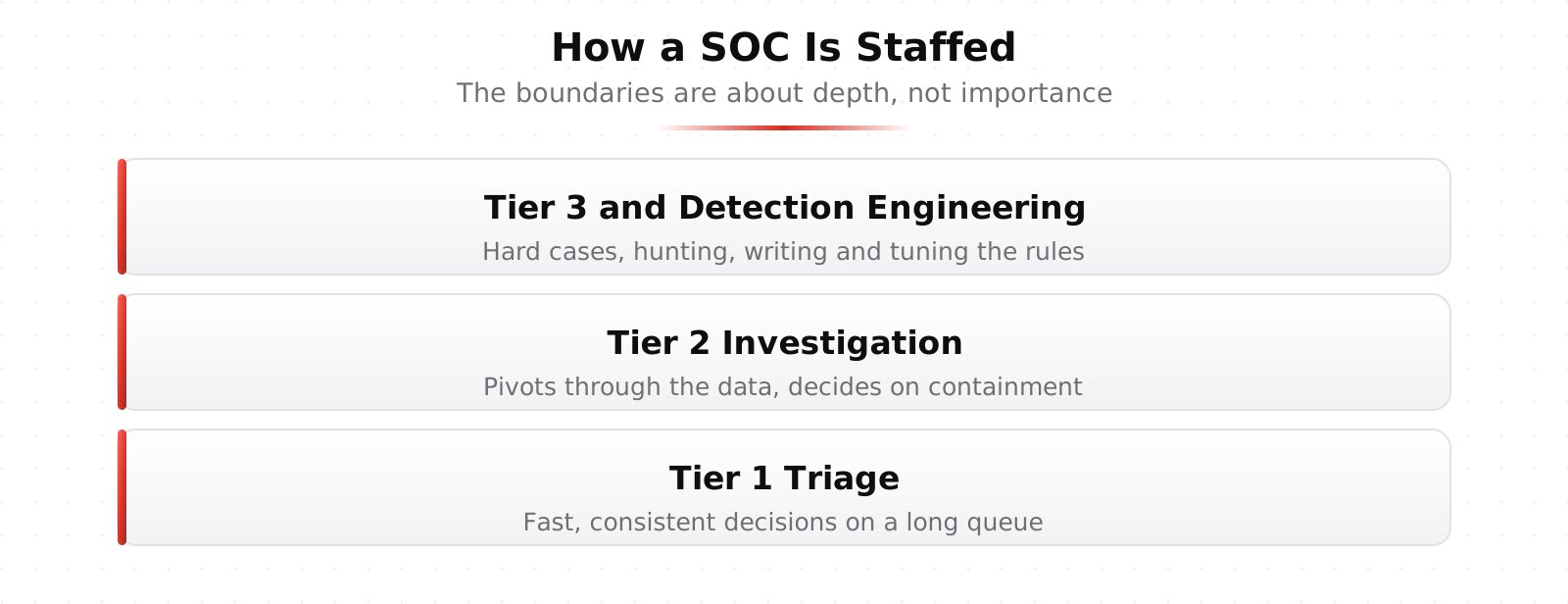
Most SOCs are organized in tiers, and the boundaries are about depth rather than importance.
Tier one triages. Alerts arrive, and the job is to decide quickly whether each one is nothing, something, or unclear. Most are nothing. The skill is being fast and consistent without becoming careless, which is harder than it sounds after the four hundredth alert.
Tier two investigates. When an alert survives triage, someone has to pull the thread: pivot through the data, work out scope, and decide whether to contain.
Tier three handles the difficult cases, hunts for what alerts never caught, writes and tunes detections, and does the deeper forensic work. In many organizations tier three and detection engineering are the same people.
Smaller organizations collapse these into one or two roles, and increasingly outsource tier one to a managed detection and response provider while keeping investigation and response in house.
What the Day Actually Looks Like
The honest description is queue work punctuated by short bursts of intensity. You work through alerts, most of which resolve to a legitimate business activity that looks unusual, a misconfigured tool, or a user doing something odd but harmless.
Then occasionally something is real, and the pace changes completely for a few hours or a few days.
Between those, the good SOCs spend time on the work that reduces future alerts: tuning rules, documenting what a given alert means, improving the runbooks, and hunting.
The Tools on the Desk
The SIEM, which is where the logs live and where most searching happens. Endpoint detection and response, which is where the deepest visibility into what a machine actually did comes from.
A ticketing or case system, because an investigation that lives in someone's head cannot be handed over at shift change. Threat intelligence, for context on indicators and actors. And increasingly a SOAR or automation layer that handles the mechanical steps.
Common commercial combinations include Splunk or Microsoft Sentinel for the SIEM, paired with CrowdStrike, SentinelOne, or Microsoft Defender for Endpoint. Elastic Security and Security Onion are widely used open options.
Metrics, and Which Ones Lie
The standard measures are mean time to detect and mean time to respond. Both are useful and both are easy to game.
Alert volume and the percentage closed as false positive tell you about tuning quality. A SOC closing 98 percent of alerts as noise is not efficient, it is drowning.
The metric almost nobody tracks is the one that matters most: how often were alerts closed incorrectly. The only way to know is to sample closed alerts and re-examine them, which takes time and occasionally produces uncomfortable answers. Mature teams do it anyway.
Alert Fatigue Is a Real Failure Mode
Human attention degrades under repetitive low signal work. That is not a character flaw, it is how attention works, and a SOC design that ignores it will fail regardless of who is staffing it.
The fixes are structural. Tune aggressively, and treat a noisy rule as a defect to be fixed rather than a burden to be absorbed. Automate enrichment so analysts spend attention on judgment. Rotate people between triage and project work. Keep shifts humane.
This is also where AI assistance has its clearest legitimate use, and its clearest misuse. See AI in the SOC.
Getting a SOC Job
Employers hiring for tier one are mostly checking three things: can you read a log and say what it means, do you understand networking and operating system basics, and will you follow a process carefully at three in the morning.
The most effective thing an applicant can bring is a specific investigation they worked through, even a lab one, explained clearly end to end. That is exactly what Week 9 of the mentorship produces. See getting hired.
Learn This at HackRange
Weeks 8 and 9 of the mentorship put you in the analyst seat with real log data and a real intrusion to find.