Shadow AI is the use of AI tools inside an organization without approval or oversight. It is the current form of a very old problem, and it spread faster than any previous version of it because the barrier to entry is a web page and an email address.
Assume it is happening in your organization. Surveys consistently find that a large share of employees use AI tools at work regardless of policy, and the ones with a ban in place are not exceptions.
The Actual Risks, Ranked
Data leaving your control is the big one. Source code, customer records, contracts, financial figures, and incident details pasted into a service you have no agreement with, no data processing terms for, and no ability to audit.
Wrong output used as if it were right is second, and it is underrated. A model produces confident, fluent, incorrect analysis, and it goes into a report or a decision without anyone checking the specifics.
Compliance exposure is third. If you are subject to GDPR, HIPAA, PCI DSS, CMMC, or a contract with data handling clauses, sending regulated data to an unvetted processor is a violation regardless of whether anything bad happens to it.
Fourth, and quietly growing, is AI features added to tools you already approved. Nobody signed up for anything, a vendor shipped an update, and now content is being processed in a new way. This is the one most likely to be missed entirely.
Discovery: Finding It in Your Own Data
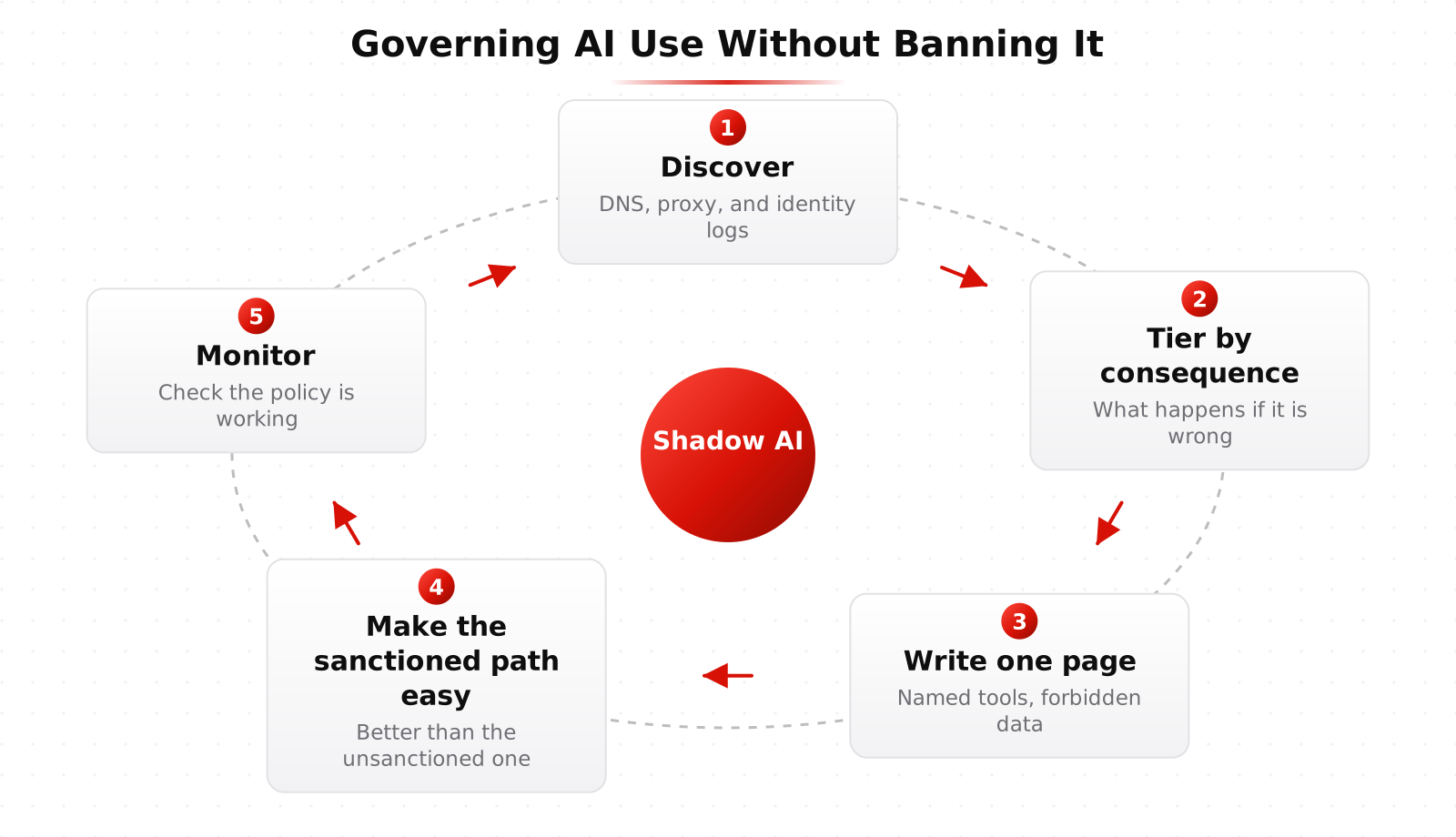
You already have the evidence, the same as with any shadow IT hunt. DNS query logs show which AI service hostnames get resolved. Web proxy or firewall logs show traffic volume and direction, which distinguishes reading a marketing page from uploading documents.
Identity provider logs show which applications people authenticated to with a company account. Browser extension inventories and endpoint software inventories catch locally installed assistants. Expense reports catch the ones people are paying for personally.
Commercial discovery generally comes from a cloud access security broker or a secure web gateway, which is part of the SSE stack. Vendors including Netskope, Zscaler, and Palo Alto Networks all market AI application discovery and control features.
The manual version of this hunt is a lab exercise in Week 7 of the mentorship, covered in shadow SaaS and shadow AI.
Why Banning It Fails
A ban produces three outcomes, and only one of them is compliance. Some people comply and work slower. Some people use it on a personal device, which is worse because you now have zero visibility. And some people use it anyway and do not tell you, which means when something goes wrong you find out late.
Bans also age badly. AI features are being added to standard business software continuously, so a blanket prohibition becomes unenforceable within a year without anyone deciding to change policy.
A Policy People Will Actually Follow
Keep it to one page. Long policies are not read, and a policy nobody read is decoration.
Name the approved tools explicitly, and make sure at least one of them is genuinely good. The single most effective control is a sanctioned option that is better than the unsanctioned one.
State clearly what data may never be entered anywhere: customer personal data, credentials and secrets, source code if that applies to you, regulated data by category, and anything covered by a nondisclosure agreement.
State what output requires verification before use, particularly anything going to a customer, a regulator, or into production code.
Give a fast path to request a new tool, and actually answer requests quickly. A two week turnaround is a policy that teaches people not to ask.
Say what happens if someone realizes they pasted something they should not have. If the answer sounds like punishment, you will never hear about it, and you need to hear about it.
Technical Controls Worth Having
Enterprise agreements for the approved tools, with data processing terms that say in writing whether your data is retained and whether it is used for training. Consumer and enterprise tiers differ meaningfully on this and the difference is contractual, not technical.
Single sign on for approved tools, so access can be revoked when someone leaves. Personal accounts survive employment.
Data loss prevention on upload paths for the most sensitive categories, applied with realistic expectations. It catches obvious mistakes rather than determined exfiltration.
Monitoring, so you can see whether the policy is working rather than assuming it is.
Get Ahead of the Agent Problem
The next version of this is AI tools that take actions rather than answer questions, connected to your systems through integrations and connectors. The permissions those integrations request are a security decision, and they are frequently approved by an end user in a two click flow.
Review what any AI integration can read and do before it is connected, and treat the connection itself as a third party. See securing AI agents and third party risk management.
Learn This at HackRange
Week 7 of the mentorship is a hands on shadow IT and shadow AI hunt using real log data, followed by writing the governance recommendation.